
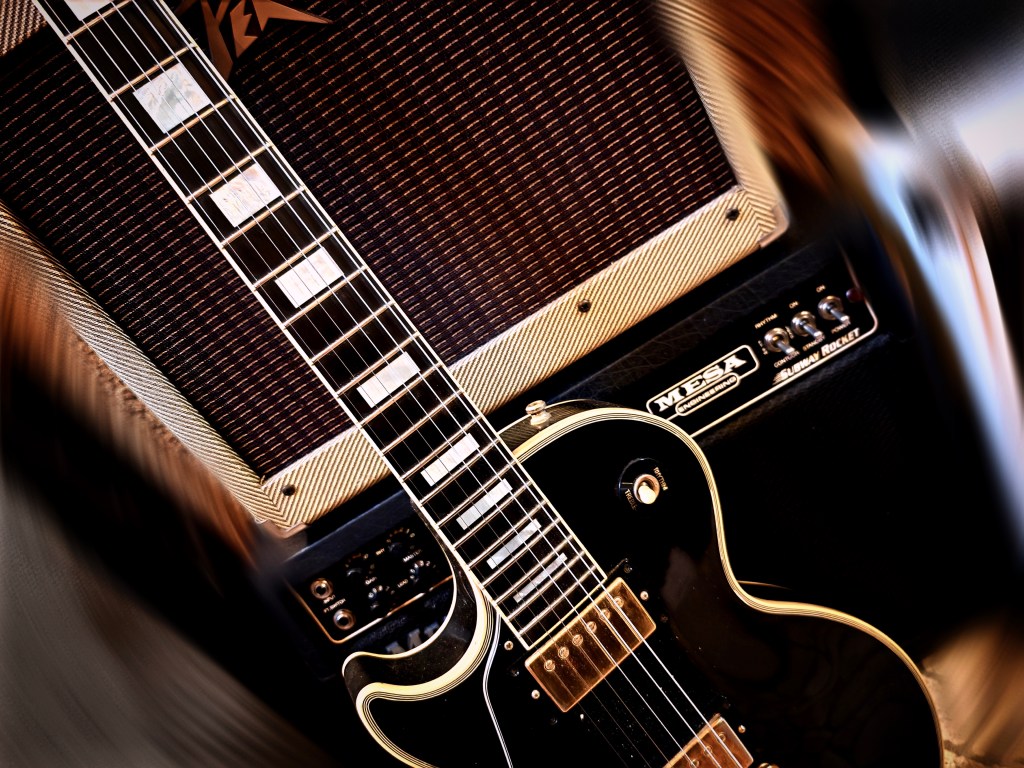
I’ve been asked many times, a question that always flatters and surprises me, “How do you get your guitar sound?”
It’s rewarding to hear, but also ironic, because I’m never fully satisfied with it. Like many guitar players, I’m always searching for perfection. And that’s where the real curiosity lies.
This got me thinking about how many options we have today compared to the past. As someone old-school, I remember when all we had were just a guitar, an amp, and a microphone. Choices were limited—not everyone could afford a dozen amps, cabinets, and mics—so we had to make do with what we had.
Now? We’re surrounded by tools. Many of them. Digital processors, pedals, amp simulations, modeling, profiling (the latest “trend”), you name it… anything you can imagine is at your fingertips. In theory, that should mean we can craft any sound we want. But here’s where things get tricky, if you ask me.
Too Many Options, Too Much Confusion
I see a parallel with how we consume music today. When I was younger, you had to save up to buy one LP and then you would have been listening to it over and over, appreciating every detail. Now, with streaming services, we have instant access to everything, but does that make us truly appreciate the music?
The same thing happens with guitar tone. Having unlimited tools is amazing if you have a clear idea of what you want. But if you don’t, the sheer number of choices can be overwhelming. I’ve explored many options, especially digital gear. The technology is incredible. Instead of helping me, it often leads to endless tweaking. I find myself searching for a “perfect” sound that not even exist.
And here’s the irony: No matter what tools I use, people still recognize my sound. Even when I switch gear, the fundamental character of my tone remains the same. That realization hit me hard. It suggests that tone isn’t just about gear, but it’s about the way we play and hear ourselves.
Finding What Works Best for You
Right now, I appreciate Universal Audio pedals for their simplicity and accuracy. I am huge fan of the LION and RUBY pedals in particular (btw, this isn’t an AD but, hey UA guys… just in case you are reading this…), I also use my trusted tube amps while taking advantage of modern IR (impulse response) technology. This lets me blend the raw power of a real amp with accurate cabinet and mic simulations.
For recording, I like to double-track guitar parts—one bright, harmonically rich tone on the left, and a mid-focused, punchy tone on the right. This creates a full, natural sound with a slight natural chorus effect, adding depth and dimension.
The Real Takeaway
To make it shorter, I believe there’s no perfect setup, just what works best for you. Should I share what works for me? Quality is important. Instead of spending time endlessly changing settings, focus on getting really good with what you have. Don’t just chase the latest gear. Get to know your equipment and push it to its limits (but I know… we’ve all been there with our gear addiction, right?!).
At the end of the day, your guitar sound is your sound. It’s not about finding the next tool. Even if it sounds somewhat stereotypical, your sound comes from your fingers rather than your gear.
Rock on \m/

 Max Quaini
Leave a comment